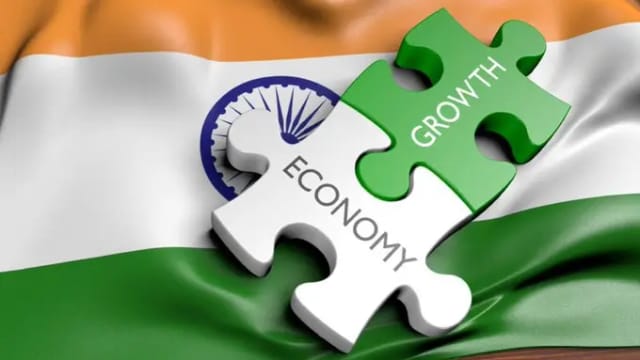

India has demonstrated resilience in responding to changes in the global economy without allowing external challenges to derail its growth momentum, Union Finance and Corporate Affairs Minister Nirmala Sitharaman has said.
Sitharaman acknowledged that India remains dependent on imports for crude oil, petroleum products and several fertilisers and their inputs. Despite this exposure to global commodity markets, she said the Indian economy has shown the ability to adjust to changing external conditions while maintaining its growth trajectory.
Editorial Insight
Key Highlights
Important points readers should notice.
Economic Resilience: India is maintaining strong growth despite geopolitical and global economic uncertainties.
Growth Momentum: The 7.8% Q1 FY27 GDP expansion indicates that domestic economic activity remains robust.
Import Vulnerability: Dependence on imported crude oil and fertilisers remains an important exposure to global price shocks.
Trade Reform: Risk-based customs screening and digitalisation are aimed at speeding up legitimate imports while strengthening scrutiny of high-risk consignments.
Next Reform Phase: Banking and customs reforms are being positioned as part of the broader effort to strengthen India’s economic capacity.
Her remarks come as India records strong economic growth despite continuing global uncertainties and geopolitical pressures.
India’s real GDP grew 7.8% year-on-year in the April-June quarter of FY2026-27, exceeding market expectations and the Reserve Bank of India’s earlier projection of 7%. Growth was supported by investment, manufacturing, domestic consumption and services.
The latest data showed real Gross Value Added growing by 8.2% during the quarter, reflecting broad-based economic activity. Manufacturing and financial, real estate and professional services were among the major contributors to growth.
Editorial Analysis
Why This Matters
India’s ability to sustain strong growth while facing global energy, geopolitical and trade pressures is increasingly important for its economic outlook. The challenge is to preserve this momentum while reducing vulnerabilities arising from imported energy and volatile global markets.
Sitharaman also highlighted India’s foreign exchange reserves at around USD 700 billion, while pointing to economic reforms and the expansion of digital infrastructure as factors that have strengthened the country’s economic capacity.
The Finance Minister said India’s economic response to global changes is also being supported by institutional reforms. The government is working on further customs and banking-sector reforms aimed at improving the efficiency of trade and strengthening the financial system.
One of the key areas under consideration is a more risk-based approach to import screening. Under the broader customs reform programme, advanced scanning and AI-based risk assessment are being expanded to make cargo clearance faster while allowing authorities to concentrate scrutiny on higher-risk consignments. The government had earlier announced a Customs Integrated System aimed at creating a single, integrated platform for customs processes.
The approach is intended to reduce unnecessary delays for businesses while maintaining stronger checks on potentially risky imports.
Sitharaman has also pointed to a broader review of the banking sector’s role in supporting India’s development ambitions. The government is seeking to build on reforms already undertaken in direct and indirect taxation and improve the overall environment for businesses and investment.
India’s latest growth performance has strengthened expectations that the economy can maintain growth above 7% during the current financial year. At the same time, economists continue to identify high energy prices, geopolitical tensions and global financial conditions as important risks to the outlook.
The combination of strong domestic demand, investment and manufacturing growth has provided India with a buffer against external shocks. However, the country’s reliance on imported energy means global crude-price movements remain an important vulnerability for inflation and economic stability.