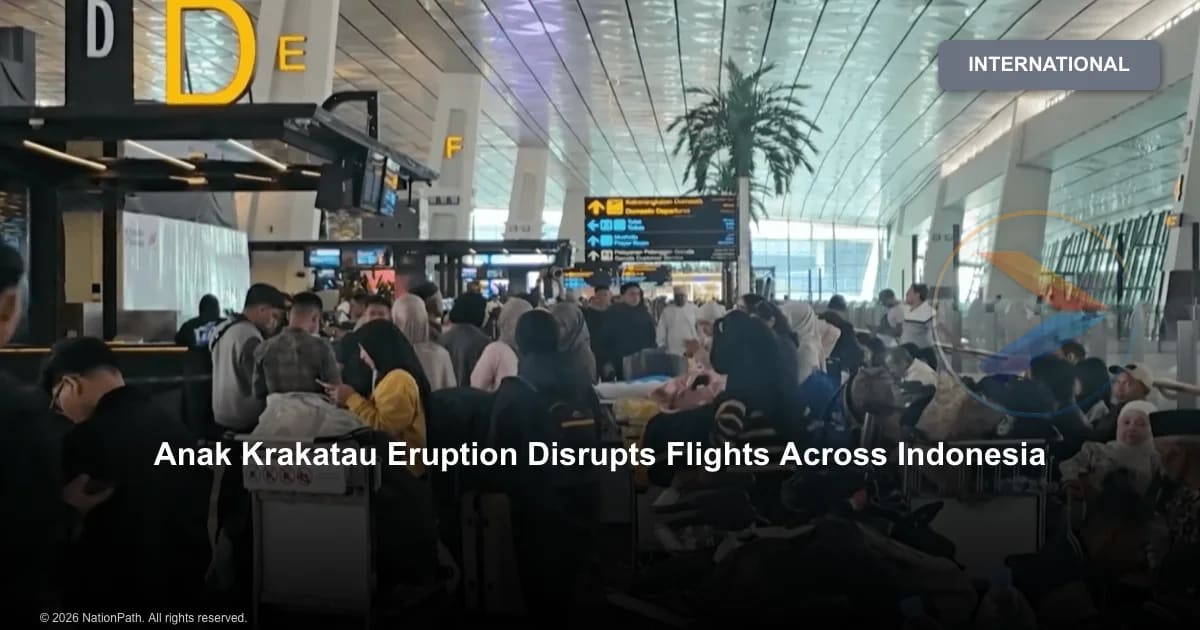

Indonesia has faced widespread flight disruption after volcanic ash from Anak Krakatau spread across parts of western Indonesia. Authorities temporarily closed eight airports as a precaution, while airlines adjusted, cancelled or diverted services because of ash in affected airspace.
The latest reports put the disruption at approximately 2,300 flights and more than 270,000 passengers, although figures vary depending on the airports and period included in the count. Earlier reports had put the impact at about 170,000 passengers and more than 1,500 flights.
Editorial Insight
Key Highlights
Important points readers should notice.
Anak Krakatau remains at Level III (Siaga/Alert).
A continuous eruptive episode lasted approximately 25 hours before ending on September 6.
Eight airports were temporarily affected by volcanic ash.
Latest reports put the impact at approximately 2,300 flights and more than 270,000 passengers.
Volcanic ash reached altitudes of approximately 50,000 feet.
Current monitoring has detected no tsunami associated with the present eruption.
Anak Krakatau is located in the Sunda Strait between Java and Sumatra. Indonesia’s Geological Agency said a continuous eruptive episode began on September 4 and continued for about 25 hours, ending on September 6. Intermittent eruptive activity followed, and authorities said further eruptions remained possible.
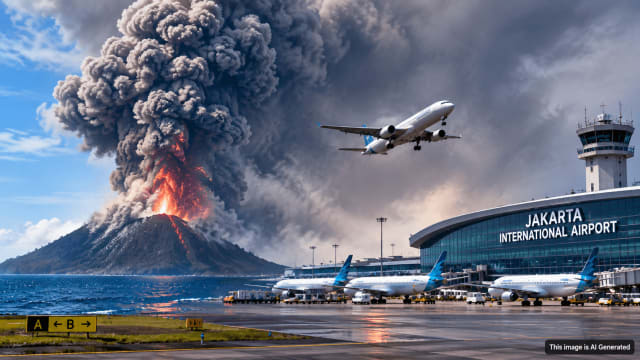
Volcanic ash affected aviation around Jakarta and other parts of Java and Sumatra. Ash was observed at altitudes reaching approximately 50,000 feet, creating conditions that required authorities and airlines to make changes to flight operations.
Indonesia’s Transport Ministry extended airport closures as a precaution, citing aviation safety and changing wind conditions. Alternative airports were also used to accommodate some flights and maintain connectivity where possible.
Editorial Analysis
Why This Matters
Volcanic ash can create serious risks for aircraft operations, making airport closures, flight cancellations and diversions necessary even when the eruption is some distance from an airport. The disruption has affected travellers, airlines, airports and regional connectivity, with further changes possible if ash continues to enter aviation routes.
The disruption also affected education. Schools in Jakarta and several other affected provinces shifted to remote learning as a precaution amid concerns over volcanic ash.
Indonesia has continued monitoring Anak Krakatau because of its ongoing activity and the volcano’s location in the Sunda Strait. The Geological Agency has maintained the volcano at Level III (Siaga/Alert) and advised people to remain outside the designated danger zone.
Despite the ongoing volcanic activity, current monitoring has found no immediate tsunami threat associated with the present eruption. BMKG reported no sea-level anomaly indicating a tsunami in the Sunda Strait.
Anak Krakatau's history remains a reason for continued monitoring. Its 2018 eruption was associated with a tsunami that killed more than 400 people. However, there is no indication that the current September 2026 eruption has triggered a tsunami.