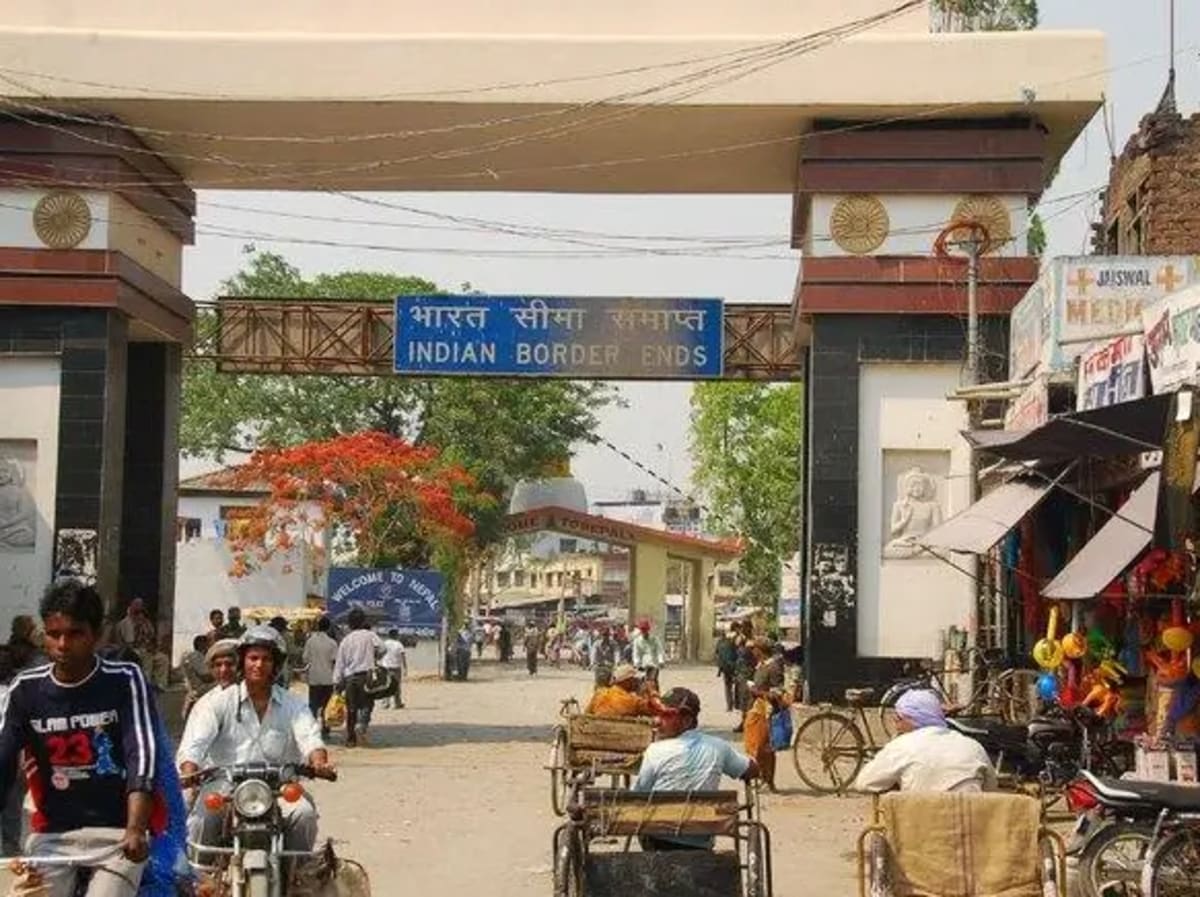

A centuries-old document has suddenly become the centre of renewed attention in Nepal, just as Kathmandu and New Delhi continue working through technical aspects of their shared border.
Nepal's Foreign Minister Shisir Khanal told Parliament that the government has treaty-related records but cannot confirm whether it possesses the original official copy of the 1816 Sugauli Treaty. Some related documents are held in Nepal's National Archives, but their status as the original signed document could not be established. The issue is significant because the Sugauli Treaty followed the Anglo-Nepalese War of 1814–16 and became a key historical basis for the demarcation of Nepal's boundary with the territory administered by the British East India Company.
Editorial Insight
Key Highlights
Important points readers should notice.
Nepal cannot confirm whether it possesses the original official copy of the 1816 Sugauli Treaty.
Foreign Minister Shisir Khanal disclosed the uncertainty in Nepal's Parliament.
The treaty is an important historical document in the demarcation of Nepal's boundary with British India.
Nepal's territorial claims involving Kalapani, Lipulekh and Limpiyadhura remain disputed by India.
India and Nepal are simultaneously conducting technical border discussions in Lucknow. Current technical cooperation includes boundary pillars, GPS mapping and no-man's-land management.
Its importance has become even more visible because Nepal and India continue to have unresolved differences over areas including Kalapani, Lipulekh and Limpiyadhura.
However, the missing or unconfirmed original document should not be interpreted as changing the existing India-Nepal boundary or automatically strengthening or weakening either country's territorial position.
The current development is primarily about the status of a historical document and the way it is preserved.
Editorial Analysis
Why This Matters
For ordinary people living along the India-Nepal border, the most immediate concerns are not old documents but roads, crossings, property, boundary pillars and day-to-day movement. That is why the current technical talks matter. The Sugauli Treaty issue adds a historical layer to the story, but it should not overshadow the practical work being undertaken by both countries today. The development also highlights the importance of maintaining historical records when those documents continue to be referenced in diplomatic and territorial discussions more than two centuries later.
Why the timing matters
The disclosure comes at a particularly sensitive moment.
India and Nepal's Survey Officials' Committee is meeting in Lucknow from August 12 to 14 to discuss technical aspects of border management. The agenda includes plans for constructing and repairing boundary pillars, clearing encroachments in no-man's land, documenting cross-border property holdings and improving GPS-based surveying. The two countries share a long and largely open border, making practical management important even while some territorial questions remain unresolved.
According to Nepal's Department of Survey, the technical mechanism involves thousands of boundary pillars and joint field work. The current process is focused on areas where the two sides can cooperate, while the major disputes over Susta and Kalapani remain outside the mandate of the Survey Officials' Committee.
The Sugauli Treaty: Why It Matters
The Sugauli Treaty was concluded in 1816 following the Anglo-Nepalese War. It established the historical framework for Nepal's boundary with the territory then controlled by the East India Company. Over the years, Nepal has referred to the treaty and related historical material while presenting its position on parts of the western boundary. India, however, does not accept Nepal's territorial claims over Kalapani, Lipulekh and Limpiyadhura and has maintained that those claims are not supported by historical facts and evidence. That makes the preservation and authenticity of historical boundary records particularly important.
A Document That Has Been Difficult to Locate
The uncertainty surrounding the original Sugauli Treaty is not entirely new.
Nepal has previously faced difficulties locating original copies of important historical treaties. Parliamentary efforts in 2019 also failed to establish the whereabouts of the original Sugauli Treaty and the original 1950 India-Nepal Treaty of Peace and Friendship. The latest statement has therefore revived an old archival question at a time when India-Nepal relations are again discussing border-related matters.
Current Border Cooperation
Despite unresolved territorial issues, India and Nepal continue technical cooperation on several aspects of border management.
The present mechanism covers:
- Repair and construction of boundary pillars
- Clearing no-man's land
- GPS-based mapping
- Recording cross-border property holdings
- Field-level inspection and maintenance
- Addressing technical changes caused by shifting river courses
The two sides have already completed technical boundary work in several districts, while further work remains pending.
This distinction is important: technical border management continues even though certain political boundary disputes remain unresolved.
Official Position / Diplomatic Context
Nepal has acknowledged that it cannot currently confirm possession of the original official copy. India's position on the broader territorial dispute remains unchanged: it rejects Nepal's claims concerning Kalapani, Lipulekh and Limpiyadhura while maintaining that outstanding issues can be addressed through established diplomatic channels.
NationPath will not describe the treaty as “lost” or claim that its absence changes India's border, because the verified information does not support either conclusion.