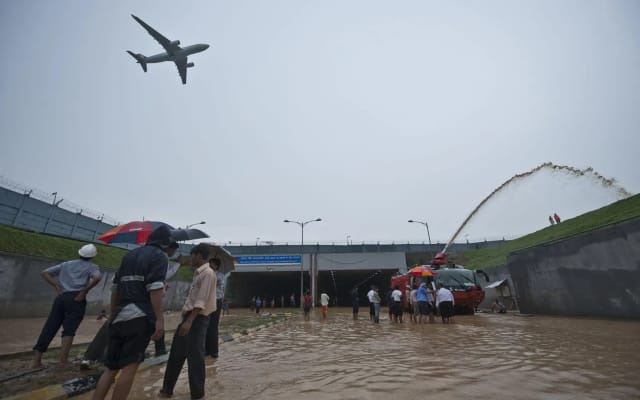

Bihar's flood crisis intensified on Saturday after the Ganga crossed its previous highest flood level at Gandhi Ghat in Patna, amid heavy rainfall and rising water levels across several rivers in the state.
According to the Water Resources Department, the Ganga at Gandhi Ghat reached 50.53 metres at 10 am on September 5, rising by 10 centimetres in just four hours. The level was one centimetre above the previous highest flood level of 50.52 metres, recorded on August 21, 2016.
Editorial Insight
Key Highlights
Important points readers should notice.
Issue/Event: Ganga crosses its previous highest flood level in Patna amid a worsening flood situation.
Location: Gandhi Ghat, Patna, and multiple flood-affected districts across Bihar.
Authority/Organisation: Bihar Water Resources Department, Disaster Management Department, NDRF, SDRF and Indian Railways.
Action Taken: Rescue teams, boats, relief camps and community kitchens deployed; railway services cancelled or diverted in vulnerable sections.
Impact: More than 10 lakh people are affected, with rising water levels creating an increased inundation risk and disrupting transport services.
The situation has affected approximately 10.26 lakh people across 11 districts, covering 50 blocks and 201 gram panchayats, according to the state Disaster Management Department. The affected districts include Patna, Bhojpur, Saran, Vaishali, Bhagalpur, Begusarai, Buxar, Samastipur, Munger, Katihar and Araria.
Authorities have warned that the Ganga could rise further. The Water Resources Department forecast the level at Gandhi Ghat could reach 50.62 metres by 8 am on Sunday, prompting continued caution in low-lying and river-facing areas.
The flood threat is not limited to the Ganga. The Gandak, Kosi, Burhi Gandak, Punpun and Ghaghara are also flowing above danger levels at several locations, increasing pressure on vulnerable areas across Bihar.
Editorial Analysis
Why This Matters
The Ganga crossing the 2016 highest flood level at Gandhi Ghat marks a significant escalation in Bihar's current flood situation. With more than 10 lakh people already affected, continued river-level increases could put additional pressure on low-lying settlements, transport infrastructure and relief operations.
The rising water has also disrupted railway operations. Railway authorities have cancelled and diverted several trains as floodwaters affected railway infrastructure. The Jamalpur-Bhagalpur section was affected after tracks were submerged between Sultanganj and Ratanpur, while rising water also reached the girder of a railway bridge in the area.
East Central Railway said four trains were cancelled and more than a dozen services were diverted as a precautionary measure amid the rising water levels.
The Bihar government has intensified rescue and relief preparations. 33 rescue teams, including six NDRF and 27 SDRF teams, have been deployed in vulnerable areas, with nearly 700 government-operated boats being used for evacuation and relief operations.
Community kitchens and relief camps are also being established in affected areas, while district administrations have been instructed to maintain continuous monitoring of embankments and vulnerable settlements.
The situation remains closely monitored as further rises in river levels could increase the risk of inundation in low-lying areas of Patna and other flood-affected districts.