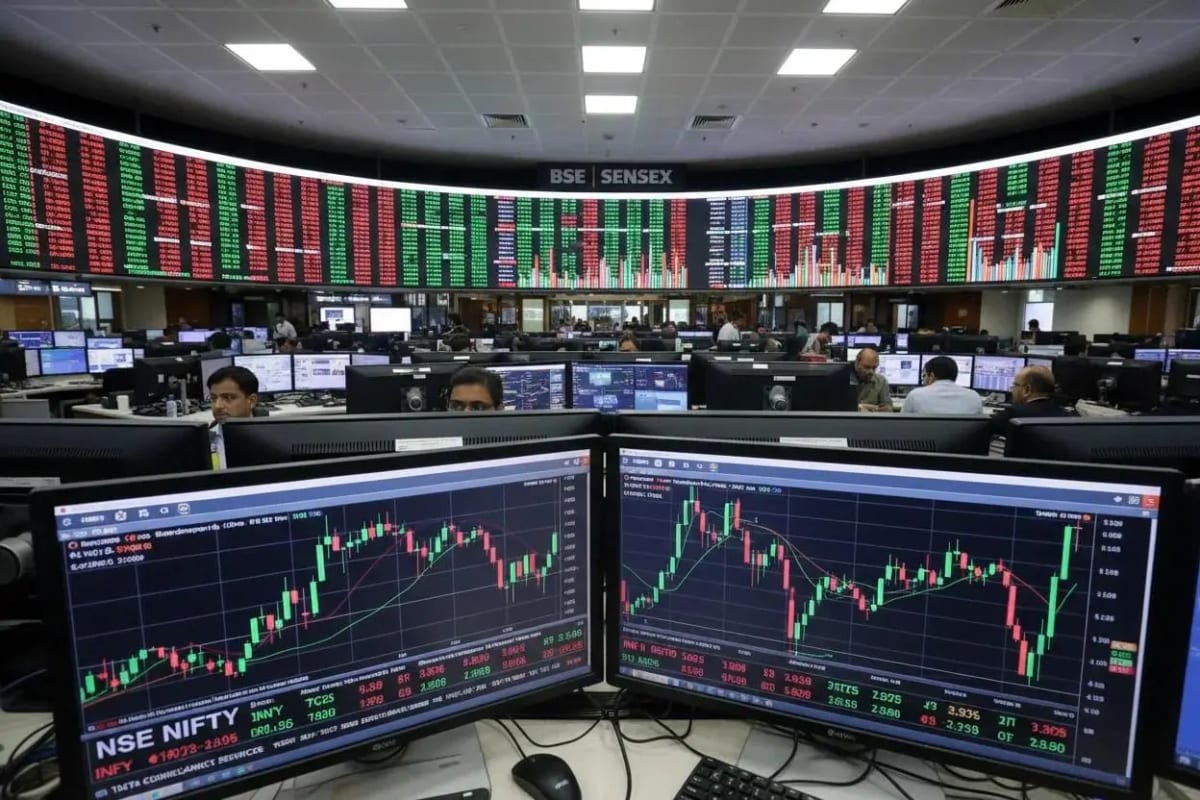

Indian equity markets extended their losing streak on Thursday, September 3, as concerns over higher crude oil prices and global economic uncertainty weighed on investor sentiment.
The BSE Sensex fell 417.49 points, or 0.55%, to close at 76,152.86, while the Nifty 50 declined 41 points, or 0.17%, to settle at 23,873.45. The decline marked the fourth consecutive session of losses for the benchmark indices.
Editorial Insight
Key Highlights
Important points readers should notice.
Issue/Event: The market's weakness is no longer limited to routine profit-booking; oil prices and global macroeconomic risks are creating a broader risk-off environment.
Location: Indian equity and derivatives markets. Authority/Organisation: BSE and NSE.
Action Taken: Investors and derivatives traders are adjusting positions and increasing hedges amid greater uncertainty around the closing auction.
Impact: The combination of higher energy costs and unusual end-of-day volatility could keep market sentiment cautious, particularly around derivatives expiry sessions.
The market had opened higher and banking stocks initially provided support. However, the early gains failed to hold as investors assessed the impact of rising oil prices, elevated global bond yields and continuing geopolitical tensions.
Brent crude climbed around 1% to $96.60 a barrel during the session, increasing concerns over India's import costs and inflationary pressures. The rise in oil prices also offset support from stronger foreign-currency mobilisation and gains in some financial stocks.
The broader market, however, showed greater resilience than the benchmark indices. Small- and mid-cap stocks gained during the session, supported by domestic flows and expectations around corporate earnings.
Editorial Analysis
Why This Matters
Higher crude oil prices are particularly important for India because they can raise import costs and add pressure to inflation. At the same time, persistent geopolitical uncertainty and elevated global yields can influence foreign investment flows and overall risk appetite. The unusual volatility in the new closing auction is also significant because it can affect how derivatives traders manage positions and risk during the final minutes of trading.
A notable feature of Thursday's session was the volatility surrounding India's newly introduced Closing Auction Session (CAS). The Sensex's indicative level experienced a sharp late-session movement, while some Sensex put-option premiums surged by 400% to 500% during the auction. The sharp moves occurred alongside the expiry of Sensex weekly futures and options contracts.
The new auction mechanism has already begun changing derivatives-market behaviour, with traders reducing position sizes and increasing hedging because of uncertainty around final closing levels. Reuters reported that average daily options turnover fell 20% month-on-month in August, the first month after the auction was introduced.