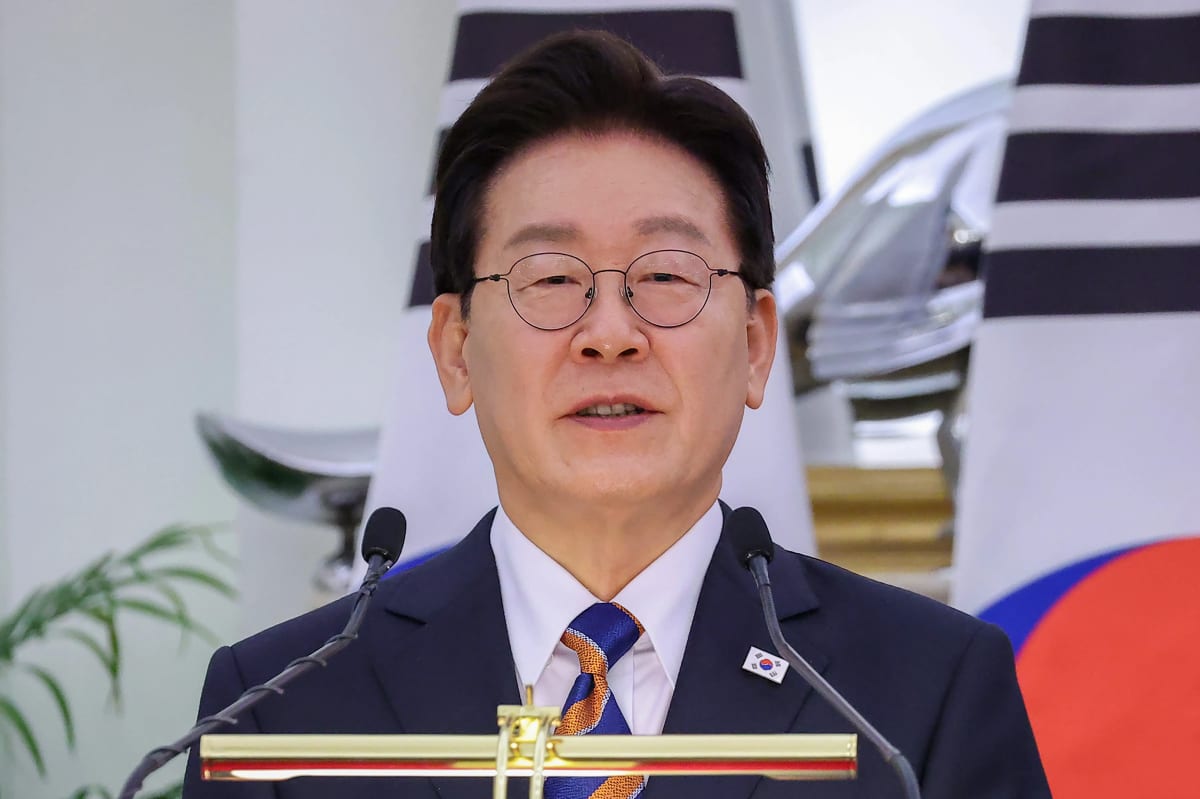

South Korean President Lee Jae Myung has called for talks with North Korea, saying Seoul should pursue peaceful coexistence rather than allowing tensions on the Korean Peninsula to remain locked in confrontation.
Speaking on Saturday during a speech marking Korea’s Liberation Day, Lee said the two Koreas should sit down for dialogue and explore ways to build a more stable relationship. The Korean Peninsula technically remains at war. The 1950–53 Korean War ended with an armistice agreement rather than a peace treaty, leaving the two sides separated by one of the world's most heavily militarised borders.
Editorial Insight
Key Highlights
Important points readers should notice.
South Korean President Lee Jae Myung called for dialogue with North Korea. Lee advocated peaceful coexistence between the two Koreas.
Seoul wants dialogue aimed at reducing tensions on the Korean Peninsula. Lee called for moving from the existing armistice towards a peace regime.
Future discussions could explore measures to address North Korea's nuclear capabilities. Seoul plans to maintain safeguards against military escalation.
Kim Jong Un's government has described South Korea as its most hostile state. North Korea has also strengthened its frontline military posture.
Lee said Seoul wants to move beyond that long-standing arrangement and work towards a peace regime on the peninsula. His proposal also includes discussions involving North Korea and other concerned parties on measures that could help address Pyongyang's nuclear capabilities. At the same time, Lee signalled that dialogue would be accompanied by safeguards designed to prevent renewed military escalation. He said South Korea would take pre-emptive and sustained measures to reduce tensions and establish multiple layers of safeguards to contain any escalation.
The approach reflects the South Korean government's effort to combine diplomacy with security preparedness rather than treating the two as competing priorities.
A Push for Coexistence
Editorial Analysis
Why This Matters
Lee's proposal comes at a sensitive moment for inter-Korean relations. Dialogue could reduce the risk of accidental military escalation and create space for broader discussions on security and nuclear weapons. But turning an armistice into a genuine peace regime would require cooperation from North Korea and other key parties. For now, the biggest question is whether Pyongyang is willing to respond to Seoul's diplomatic opening.
Lee's latest proposal broadly builds on a position he outlined last year, when he pledged to respect North Korea's political system and pursue peaceful coexistence.The objective is significant because relations between Seoul and Pyongyang have remained deeply strained.
North Korean leader Kim Jong Un has abandoned the country's previous policy of pursuing reunification with the South and has instead described South Korea as its most hostile state. Pyongyang has also strengthened its frontline military posture, making any rapid improvement in inter-Korean relations difficult.
Against that backdrop, Lee's call for dialogue represents an attempt to reopen diplomatic space even while acknowledging the serious security challenges facing the peninsula.
The Nuclear Question
North Korea's nuclear programme remains the biggest obstacle to lasting peace.
Pyongyang has continued to develop and expand its nuclear and missile capabilities, while South Korea and its allies have maintained strong deterrence measures. Lee's proposal suggests that any future dialogue could include discussions on practical steps to reduce nuclear risks.
However, the willingness of North Korea to enter such talks remains uncertain. For Seoul, the challenge is to create conditions in which dialogue can take place without weakening its ability to respond to military threats.