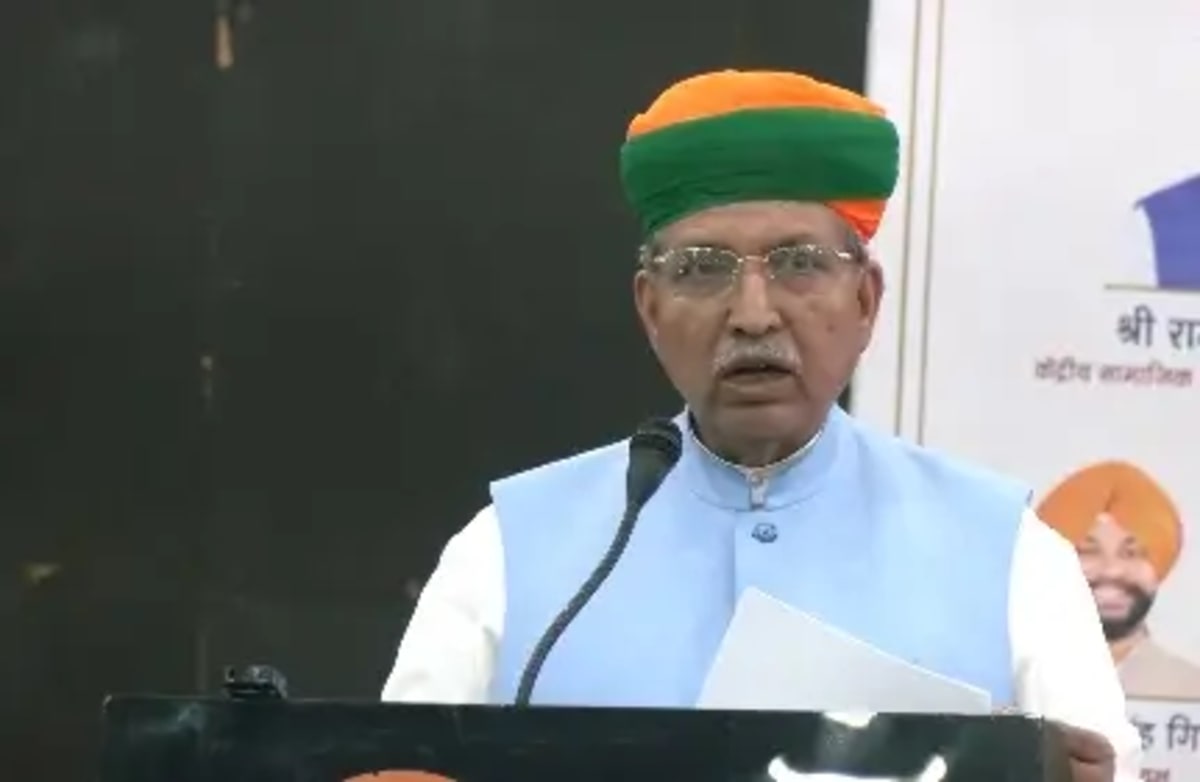

Law and Justice Minister Arjun Ram Meghwal on Saturday emphasised the need to reduce manual intervention in sanitation work through greater use of mechanisation, stressing that the safety and welfare of sanitation workers must remain a priority.
Speaking at the Foundation Day celebrations of the National Commission for Safai Karamcharis (NCSK) in New Delhi, Meghwal highlighted the need for improved safety standards and better protection for workers engaged in sanitation-related activities.
Editorial Insight
Key Highlights
Important points readers should notice.
Arjun Ram Meghwal called for greater mechanisation of sanitation work. The objective is to reduce manual intervention in hazardous sanitation activities.
The Minister stressed safety equipment, training and health insurance. He called for timely compensation for sanitation workers involved in accidents.
Private-sector sanitation workers should also receive appropriate support. Meghwal called for better coordination between insurance and compensation schemes.
Efforts will be made to develop a national memorial dedicated to Gangu Baba.
The Minister highlighted the contribution of lesser-known community heroes.
The Minister stressed the importance of providing sanitation workers with appropriate protective equipment, training and health insurance. He also called for stronger monitoring mechanisms to ensure that safety measures are properly implemented at workplaces.
Meghwal emphasised that workers who suffer accidents while carrying out sanitation duties should receive timely compensation. He said this should also cover sanitation workers employed in private establishments.
Push for Mechanisation
Editorial Analysis
Why This Matters
Sanitation work can involve serious occupational risks, particularly when workers are required to perform hazardous tasks manually. The push for mechanisation is therefore significant because reducing direct human involvement can potentially improve workplace safety. At the same time, mechanisation alone cannot address every challenge. Proper equipment, worker training, health protection, monitoring and timely compensation remain important components of a comprehensive worker-safety framework. The Minister's emphasis on coordinating welfare schemes also highlights the importance of making government support more accessible to sanitation workers and their families.
A key focus of the Minister's address was the need to reduce human involvement in hazardous sanitation work through mechanisation.
Greater use of machines and technology can help reduce workers' direct exposure to dangerous conditions and improve workplace safety.
The emphasis on mechanisation comes alongside the need for proper training and monitoring so that sanitation workers are able to operate equipment safely and effectively.
Better Coordination for Worker Welfare
Meghwal also called for bringing together various government schemes related to insurance and compensation.He stressed the need for a more coordinated framework through which sanitation workers can access welfare measures without unnecessary difficulties.
A better-integrated approach could help improve access to financial assistance, insurance coverage and other support mechanisms for workers and their families.
The Minister's remarks placed particular emphasis on ensuring that welfare measures translate into practical support for sanitation workers, especially in cases involving workplace accidents.
Gangu Baba Memorial
During the event, Meghwal also announced that efforts would be made to develop a major national memorial dedicated to Gangu Baba, a Valmiki community hero associated with the 1857 uprising.
The Minister also emphasised the importance of recognising lesser-known heroes from the community and highlighting their contributions to India's history. The proposed memorial is intended to bring greater attention to historical figures whose contributions, according to the Minister, have not received adequate recognition.