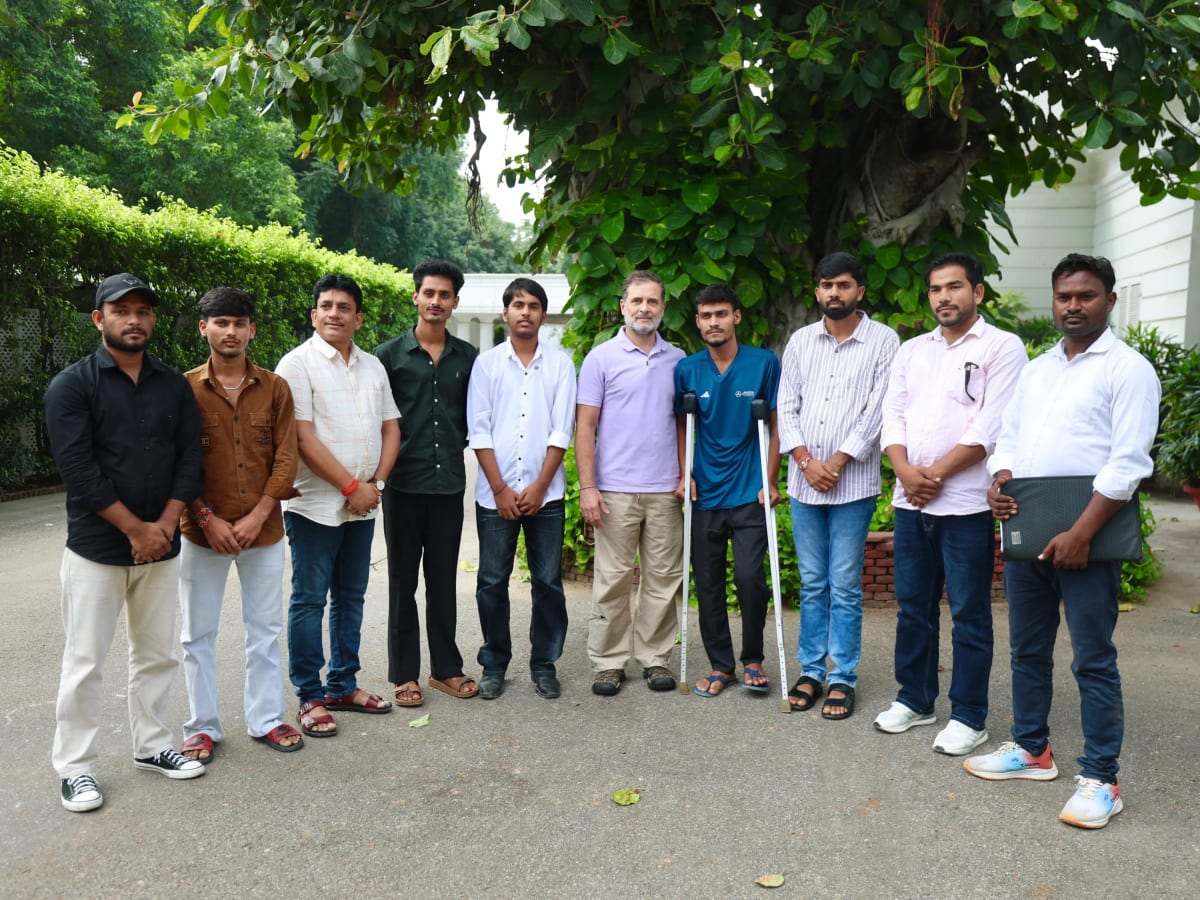

Congress leader and Leader of Opposition in the Lok Sabha Rahul Gandhi has stepped up his criticism of the Bihar government after meeting students and young people who, according to him, suffered severe police action while raising concerns over alleged irregularities in the examination system.
In a statement following the meeting, Gandhi said the students were seeking fair opportunities, a transparent examination system and their rights. He questioned the use of force against protesters and asked why lathis and firearms were needed against young people raising such demands.
Editorial Insight
Key Highlights
Important points readers should notice.
The controversy is evolving from an examination grievance into a larger debate over how governments respond when young people challenge institutional failures.
Bihar provides a significant political backdrop because examination and recruitment issues directly affect a large and politically important youth population.
The real test for the state administration is whether allegations of excessive force and examination-related failures receive credible institutional scrutiny rather than becoming solely a political confrontation.
Rahul Gandhi's direct engagement with affected students has elevated their grievances from a local protest issue into a broader Opposition narrative around accountability and youth rights.
The episode could deepen political attention on Bihar's examination system, policing standards and the government's approach towards organised youth dissent.
Gandhi alleged that several students were injured during police action and specifically referred to the use of an AK-47 and pistol firing. He also highlighted the case of a young man who, according to Gandhi, wanted to join the armed forces but suffered a serious leg injury after being shot.
The allegations come amid an ongoing political controversy in Bihar over protests linked to examination-related grievances. Gandhi has argued that responsibility for alleged excessive force cannot simply be placed on lower-level officials and that the state government must answer for the broader conduct of the administration.
He said the episode could represent either action carried out under higher-level instructions or a serious failure of governance. Gandhi also pledged continued support to the affected students and youths.
Editorial Analysis
Why This Matters
For thousands of students preparing for competitive examinations, transparency and predictable recruitment processes directly affect their education, employment prospects and future. The controversy becomes more significant when grievances over examinations are followed by allegations of police excesses. It raises a broader question about whether institutional disputes involving young people are being resolved through dialogue and due process or through confrontation. Politically, the issue also gives the Opposition an opportunity to frame youth concerns as a question of governance and accountability.
The Congress leader's intervention gives the student issue a larger political dimension ahead of the wider political contest in Bihar. Rather than limiting his criticism to examination irregularities, Gandhi has linked the issue to youth opportunity, government accountability and the right to protest.
The controversy also comes after a police firing incident during a student protest in Siwan. A police constable was seen firing an AK-47 during clashes with protesters and was subsequently suspended, with departmental proceedings initiated against him. Police maintained that the weapon was fired in the air after clashes with protesters, while claims regarding injuries caused by the firing remain disputed.
The distinction is significant because allegations of police brutality and the circumstances surrounding individual injuries remain matters of political and public dispute. Gandhi's latest statement therefore represents the Opposition's position on the episode and should not be treated as an established judicial finding.
The development also fits into Gandhi's broader outreach to students and young people. His recent meetings with student groups have increasingly focused on examination systems, educational opportunities and grievances involving state institutions.
For Bihar, the issue carries political significance because examination and recruitment-related concerns directly affect a large young population competing for limited educational and employment opportunities.
The immediate political question is whether the controversy remains centred on individual incidents of police action or develops into a wider debate over examination governance and accountability.