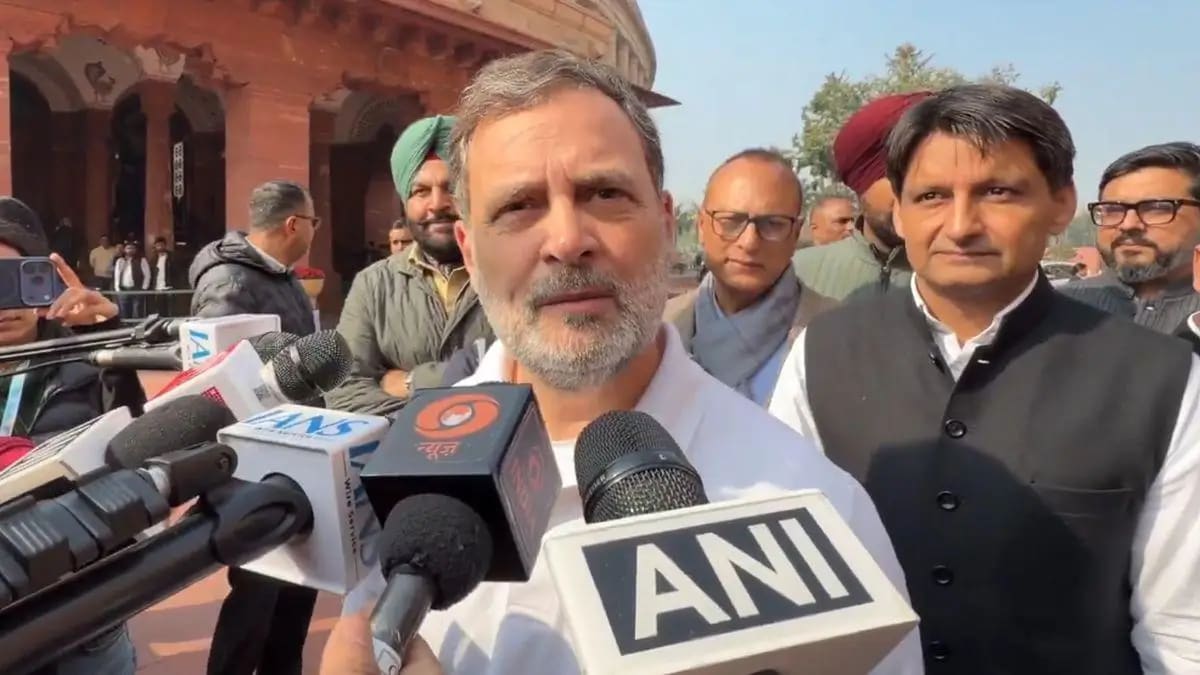

The Supreme Court has granted significant legal relief to Congress leader and Leader of Opposition in the Lok Sabha, Rahul Gandhi, by quashing a criminal complaint and the related summons issued against him over remarks he made about Hindutva ideologue V.D. Savarkar.
The case was before a bench comprising Justice Dipankar Datta and Justice Sheel Nagu, which examined Gandhi's challenge to the criminal proceedings originating from a complaint filed in Uttar Pradesh.
Editorial Insight
Key Highlights
Important points readers should notice.
Supreme Court quashes the criminal complaint against Rahul Gandhi over Savarkar remarks.
The Court also sets aside the related summons and magistrate's orders.
The case was heard by Justice Dipankar Datta and Justice Sheel Nagu. The Court found that the required government sanction had not been obtained.
The dispute originated from Gandhi's remarks during the Bharat Jodo Yatra in November 2022.
The case involved allegations under provisions including Section 153A and Section 505 of the IPC.
The Court's decision was based on a procedural legal requirement. During the proceedings, it emerged that the required sanction from the Uttar Pradesh government had not been obtained. The Court consequently quashed the complaint as well as the orders passed by the magistrate.
The case relates to comments made by Gandhi on November 17, 2022, during the Bharat Jodo Yatra at a rally in Maharashtra's Akola district.
The complaint alleged that Gandhi's remarks about Savarkar amounted to offences including promoting enmity between groups. A magistrate in Uttar Pradesh subsequently issued summons to Gandhi, leading him to approach the Supreme Court seeking relief.
Editorial Analysis
Why This Matters
The ruling is significant because it closes a criminal proceeding involving one of India's most prominent opposition leaders and a politically sensitive subject. For Rahul Gandhi, the decision removes the immediate legal proceedings connected with this particular Savarkar-related complaint. For the wider legal debate, the case illustrates how procedural requirements can become decisive even when the underlying allegations involve politically contentious speech. The ruling also comes at a time when political speeches and criminal complaints arising from public remarks continue to generate substantial legal and political debate in India.
The Supreme Court's ruling brings the particular criminal proceedings to an end on the basis of the missing sanction.
Legal Context
The complaint involved allegations under Section 153A of the IPC, relating to promotion of enmity between groups, among other provisions.
The Supreme Court noted that the necessary government sanction had not been obtained. Reports of the proceedings state that the Uttar Pradesh government's affidavit did not disclose the required sanction.
That procedural deficiency was sufficient for the Supreme Court to quash the proceedings.
It is therefore important to distinguish between quashing a case on a legal/procedural ground and a judicial finding on the underlying political or historical claims made in the disputed speech.