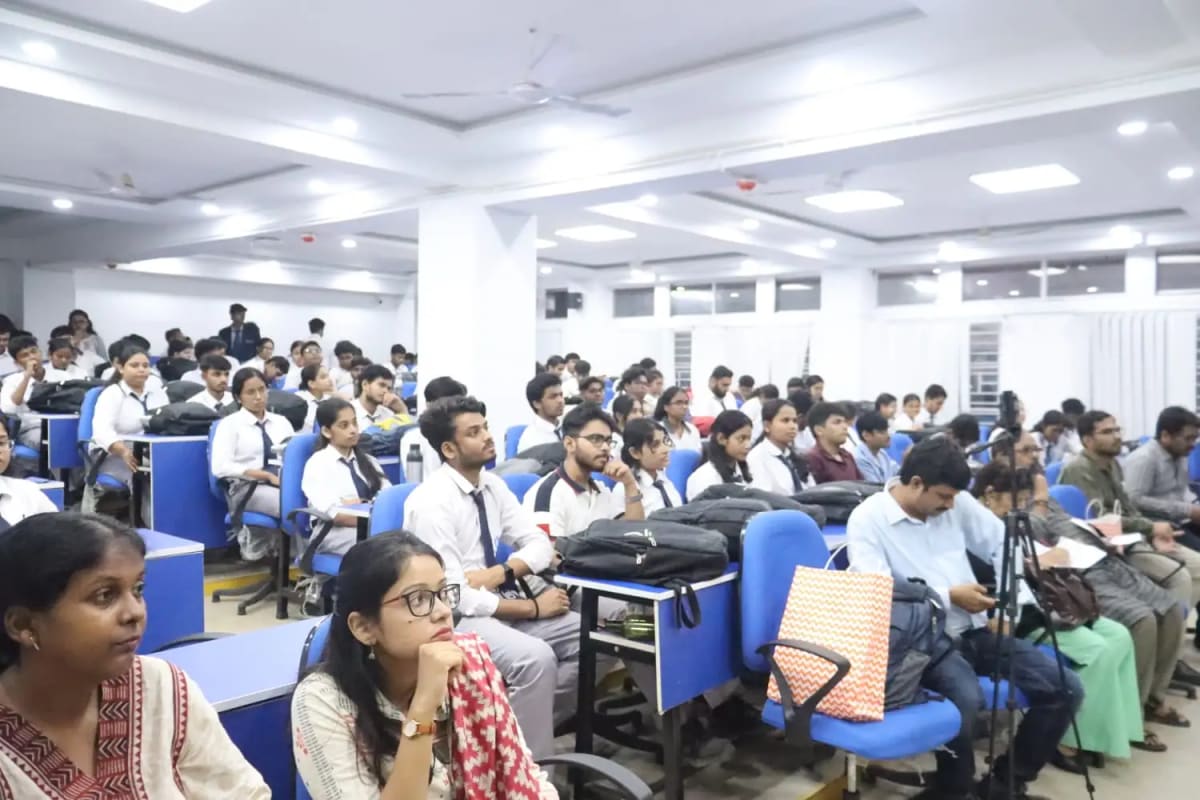

More than 170 students showcased their technological and engineering skills by developing around 30 advanced drones at the ‘Avionics’ drone competition organised at the Institute of Engineering and Management (IEM), Salt Lake.
The competition was organised by the Department of Mechanical Engineering with the objective of encouraging innovation among students and promoting the development of drone technology.
Drone technology and artificial intelligence are increasingly being explored for applications across sectors such as agriculture, industrial operations, disaster management and defence. The student teams participating in the competition worked on different drone designs and technologies, demonstrating their understanding of engineering, automation and emerging technological applications.
The event provided students with an opportunity to translate their technical knowledge into practical drone-based solutions. More than 170 students were divided into different teams for the competition, collectively developing approximately 30 drones featuring advanced technological capabilities.
Faculty members Professor Rahul Vaidya and Professor Dwaipayan Dey highlighted the potential of drone technology in addressing emerging challenges across different sectors.
Editorial Analysis
Why This Matters
The competition demonstrates how engineering students are gaining practical exposure to technologies that are increasingly relevant across multiple industries. Drone systems combined with AI have the potential to improve efficiency, monitoring and response capabilities in agriculture, industry and disaster management. Such student-led innovation can also contribute to developing a skilled workforce capable of working with emerging technologies.
According to the faculty members, drones could play an important role in areas such as climate-change response, agricultural development, industrial applications and strengthening defence capabilities.
The growing use of drones in agriculture can help improve monitoring and operational efficiency, while their ability to access difficult or dangerous locations can make them useful during natural disasters. The technology is also increasingly relevant to industrial inspection and other applications where remote monitoring can reduce risks and improve efficiency.
The competition at IEM reflects the growing emphasis on giving students practical exposure to emerging technologies and encouraging them to develop solutions for real-world challenges.
By bringing together students, engineering skills and drone technology, the event also provided a platform for young innovators to explore applications beyond conventional academic projects.